
Davis Editions Music Publishing
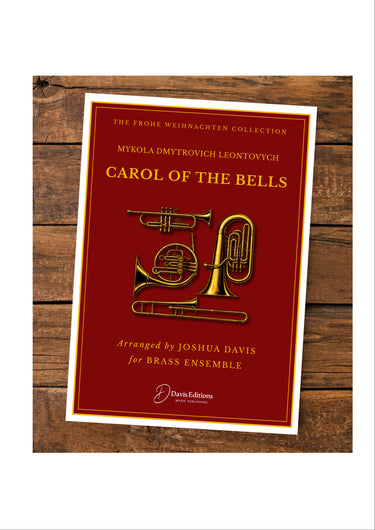
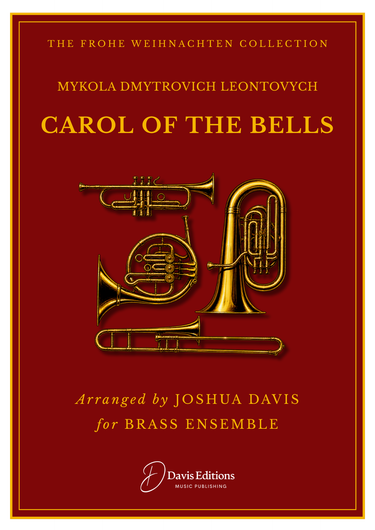
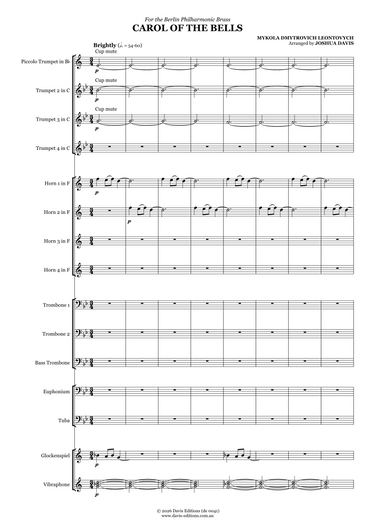
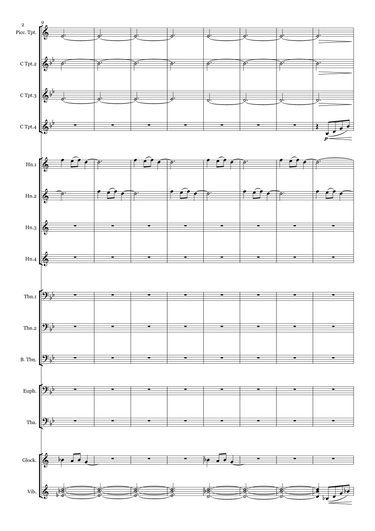
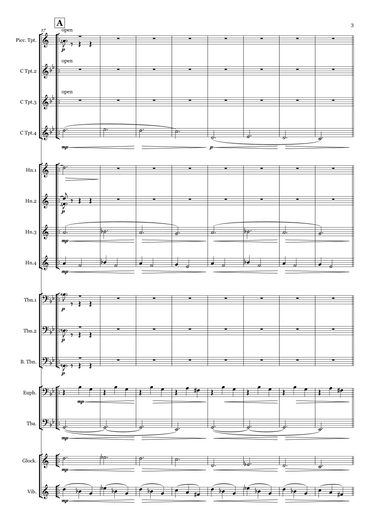
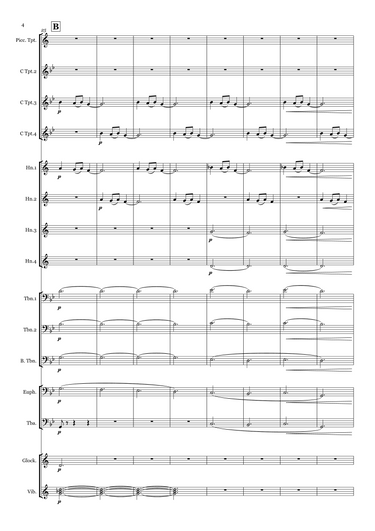
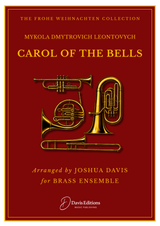
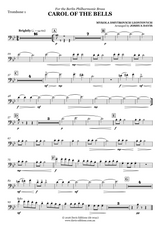
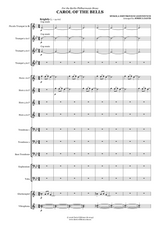
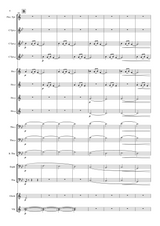
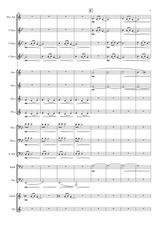
Carol of the Bells - Brass Ensemble
Product Information
Composer: Leontovych, Mykola Dmytrovych
Arranger: Davis, Joshua
Ensemble: Large Brass Ensemble and Percussion
Duration: Approx. 2 1/2 mins
SKU: DE 0041
Couldn't load pickup availability
Carol of the Bells
Tell all the world: Jesus is King!
Loudly proclaim with one accord,
The happy tale; Welcome the Lord
The birth day of Jesus is here.
Herald the news To old and young,
Tell it to all, In ev’ry tongue.
"Carol of the Bells" traces its roots to "Shchedryk," an ancient Ukrainian folk melody that originally blessed families with New Year prosperity. Ukrainian composer Mykola Leontovych transformed it between 1914–1916 into an intricate choral arrangement centred on a haunting four-note motif. The composition captivated international audiences during a 1922 Carnegie Hall performance by a Ukrainian touring ensemble. In 1936, American conductor Peter J. Wilhousky reimagined the piece with English lyrics celebrating Christmas bells and festive joy, establishing the beloved seasonal standard recognised worldwide today.
As recorded on the 2025 album release from the Berlin Philharmonic Brass Ensemble, "Frohe Weihnachten!"
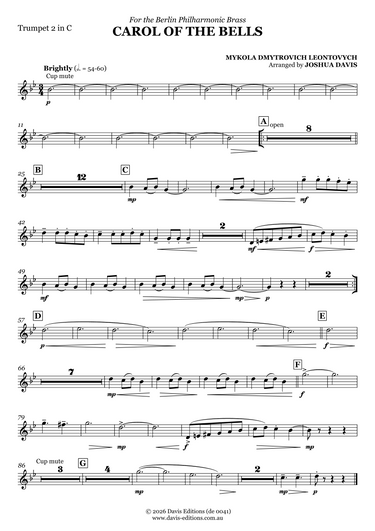
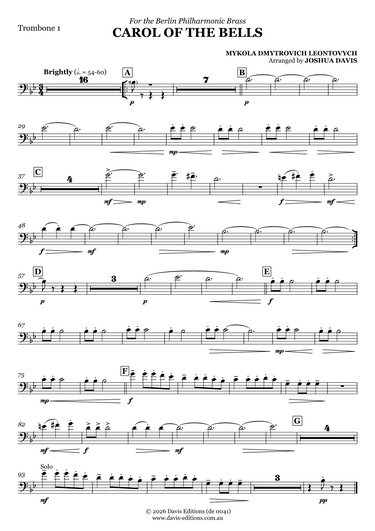
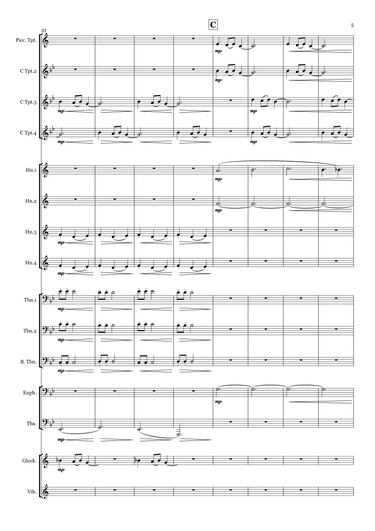
Instrumentation
Featured product
Shop new release products and popular items
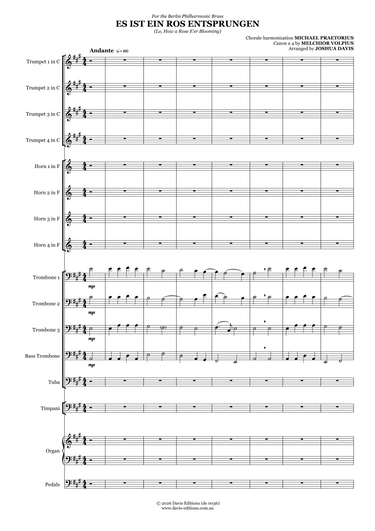
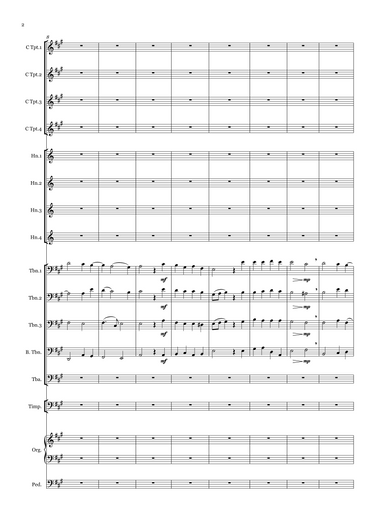
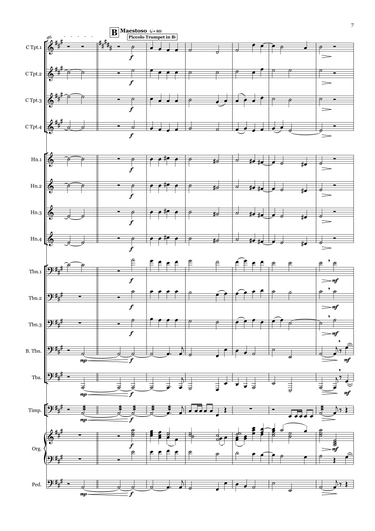
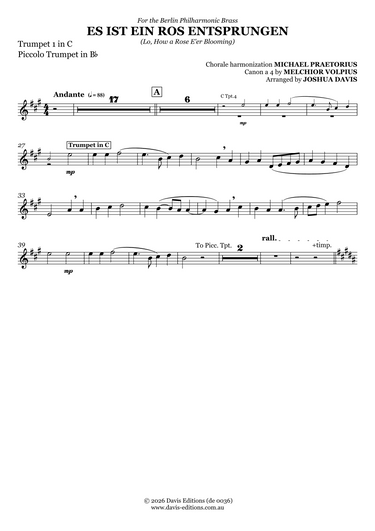
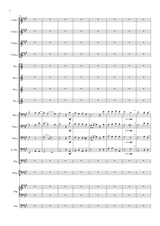
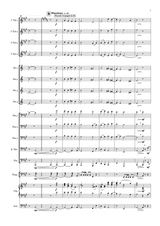
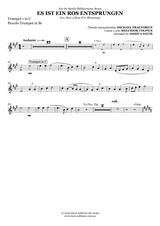
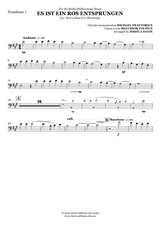
Es Ist ein Ros Entsprungen - Brass Ensemble
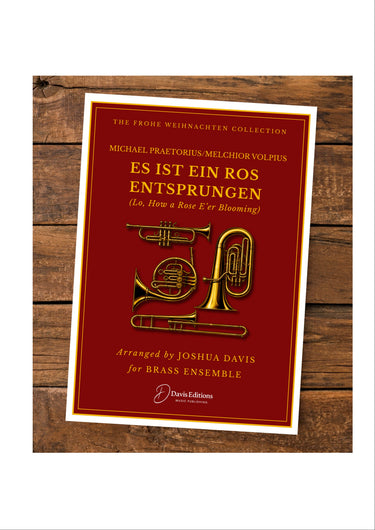
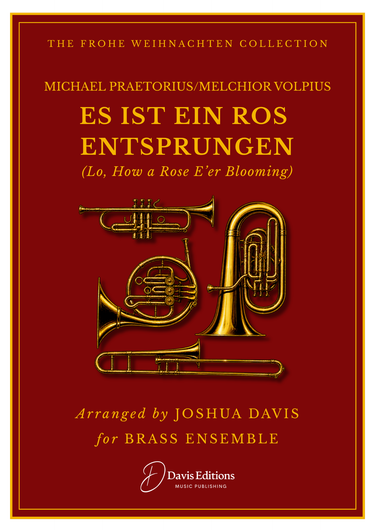
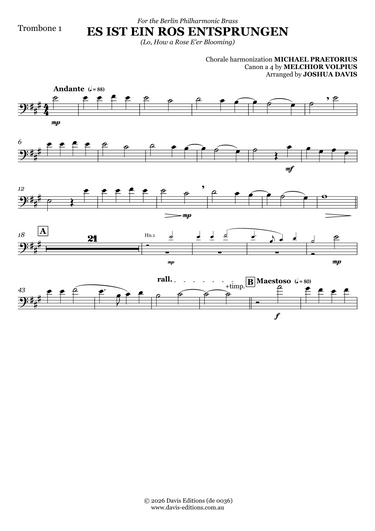
Es Ist ein Ros Entsprungen (Lo, How a Rose E’er Blooming)
Lo, how a Rose e'er blooming
From tender stem hath sprung!
Of Jesse's lineage coming
As men of old have sung.
It came, a flower bright,
Amid the cold of winter
When half-gone was the night.
Isaiah 'twas foretold it,
The Rose I have in mind:
With Mary we behold it,
The virgin mother kind.
To show God's love aright
She bore to men a Savior
When half-gone was the night.
This Advent and Christmas hymn, possibly dating to the fifteenth century, draws textually from Isaiah's prophecies. The "rose" emerging from Jesse's stem symbolizes Christ's birth as the source of life through death. Michael Praetorius published this beloved Advent hymn in 1609, directing its "rose" symbolism toward Christ's incarnation rather than Mary. Theodore Baker later translated the first two verses into English around 1894. The arrangement balances peaceful melody with subtle melancholy, reflecting the duality of Christmas—rejoicing in Christ's incarnation whilst acknowledging His sacrifice and promised return.
Melchior Vulpius, a contemporary of Praetorius composed a four-voice canon based upon the same melody. Though more concise in scope, the Vulpius canon functions effectively as a distinguished prelude to Praetorius's more expansive composition.
As recorded on the 2025 album release from the Berlin Philharmonic Brass Ensemble, "Frohe Weihnachten!"
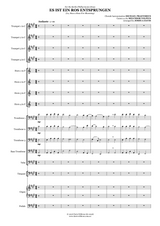
Instrumentation