
Davis Editions Music Publishing
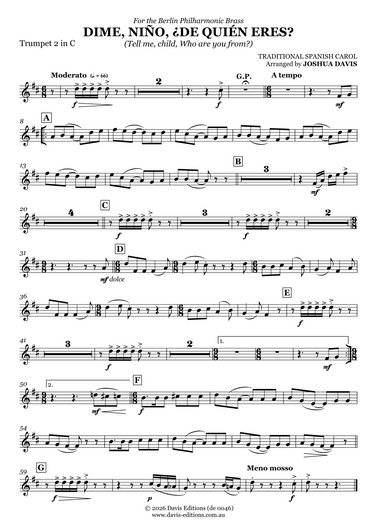
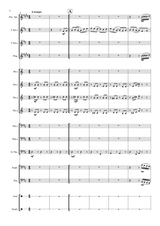
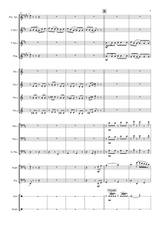
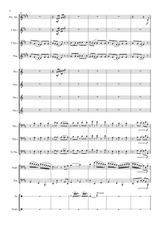
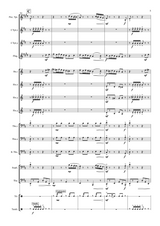
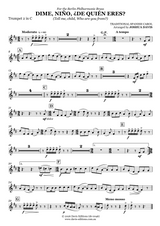
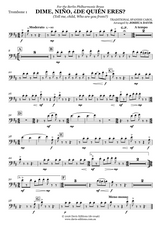
Dime, Niño, ¿de quién eres? (“Tell Me, Child, Whose Are You?”) - Brass Ensemble
Product Information
Composer: Traditional (Spain)
Arranger: Davis, Joshua
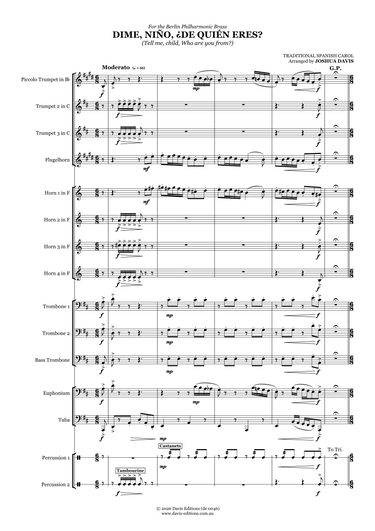
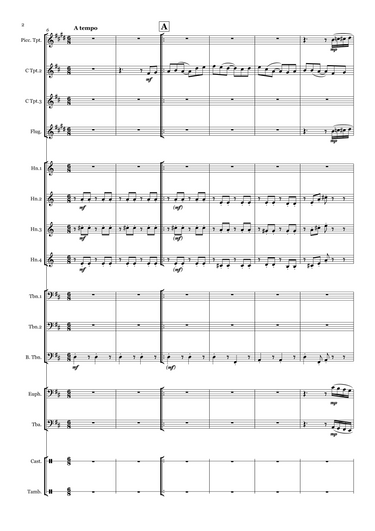
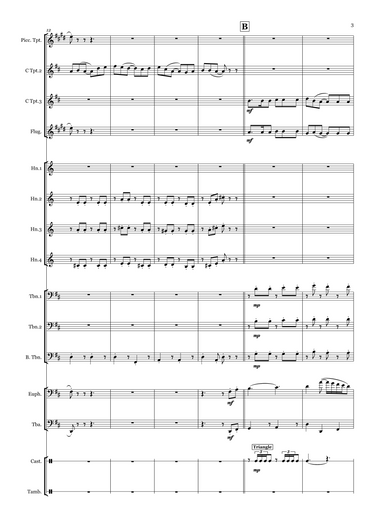
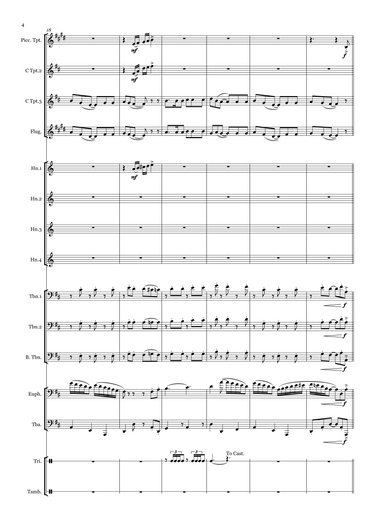
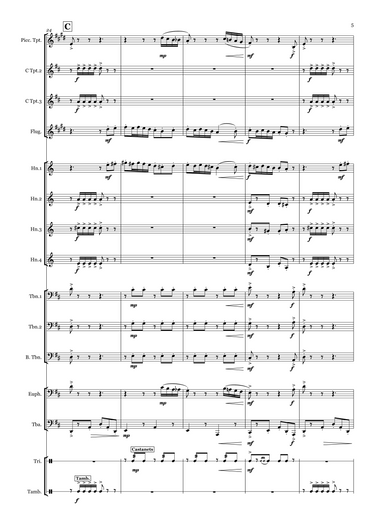
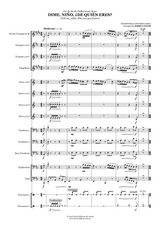
Ensemble: Large Brass Ensemble and Percussion
Duration: Approx. 3 1/2 mins
SKU: DE 0046
Couldn't load pickup availability
"Dime, Niño, ¿de quién eres?"
Tell me, Child, whose are you
all dressed in white?
"I belong to the Virgin Mary
and to the Holy Spirit."
May the songs of my land
resound with joy
and long live the Child of God
who was born on Christmas Eve.
May the songs of my land
resound with joy
and long live the Child of God
who was born on Christmas Eve.
Tell me, Child, whose are you
and if your name is Jesus?
"I am love in the manger
and suffering on the Cross."
Christmas Eve is coming, tururú,
Christmas Eve is leaving,
and we will go, tururú,
and we will not come back.
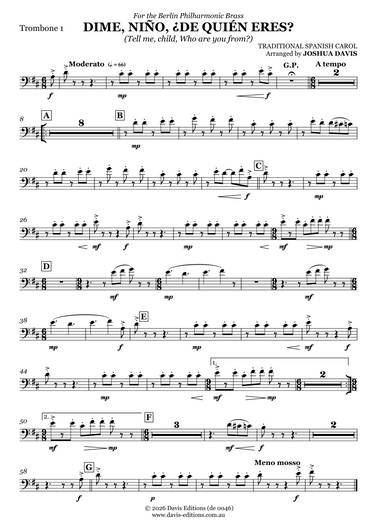
"Dime, Niño, ¿de quién eres?" is a traditional Spanish Christmas carol, or villancico, with anonymous folkloric origins rooted in the oral traditions of Andalusia and Murcia. The carol presents a tender dialogue with the newborn Jesus, who answers whose he belongs to through contrasting imagery: "I am of the Virgin Mary and the Holy Spirit; I am love in the manger and suffering on the Cross." This interplay of "love/suffering" and "manger/Cross" weaves together the joy of Christmas with profound spiritual reflection on redemption and human mortality.
The secondary chorus adds deeper resonance, evoking the brevity of human existence. Yet the playful "tururú" refrain—a burlesque touch (played by the trombones)—seems to neutralize any hint of sadness. This masterful blend of sacred contemplation and celebratory spirit has made it a cherished Christmas tradition throughout Spain and Latin America for centuries.
Instrumentation
Featured product
Shop new release products and popular items
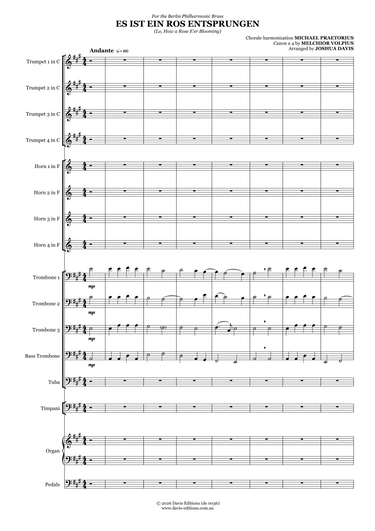
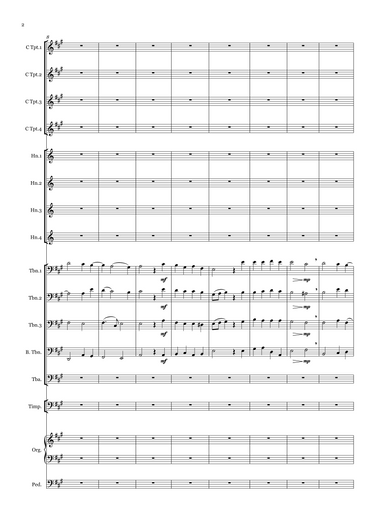
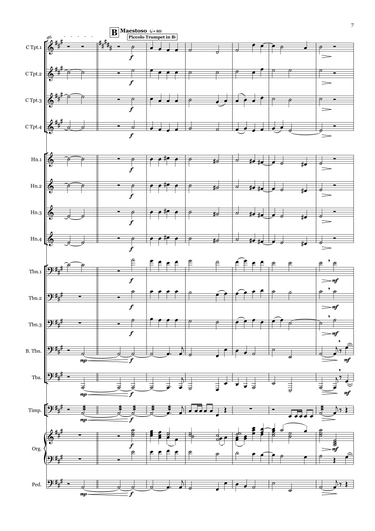
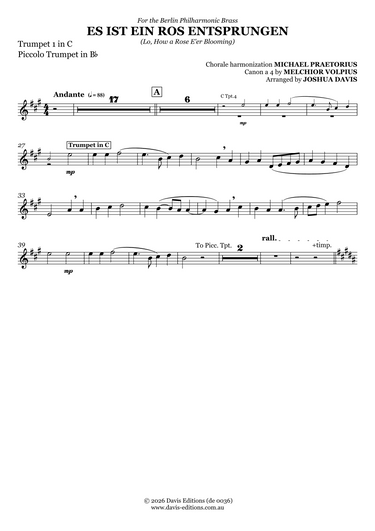
Es Ist ein Ros Entsprungen - Brass Ensemble
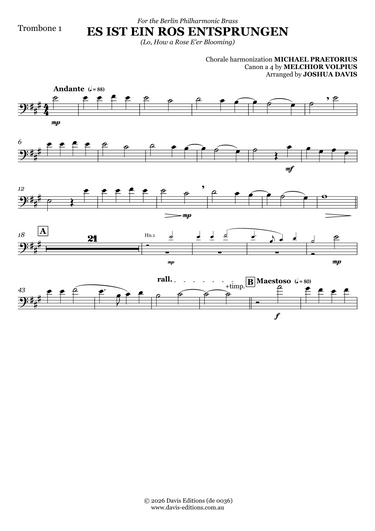
Es Ist ein Ros Entsprungen (Lo, How a Rose E’er Blooming)
Lo, how a Rose e'er blooming
From tender stem hath sprung!
Of Jesse's lineage coming
As men of old have sung.
It came, a flower bright,
Amid the cold of winter
When half-gone was the night.
Isaiah 'twas foretold it,
The Rose I have in mind:
With Mary we behold it,
The virgin mother kind.
To show God's love aright
She bore to men a Savior
When half-gone was the night.
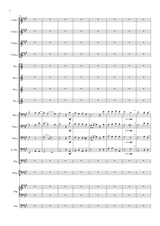
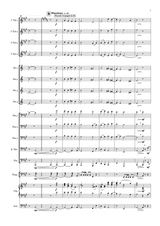
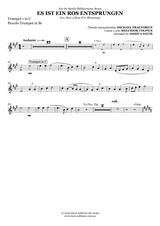
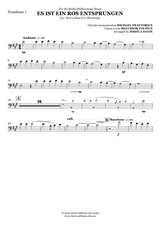
This Advent and Christmas hymn, possibly dating to the fifteenth century, draws textually from Isaiah's prophecies. The "rose" emerging from Jesse's stem symbolizes Christ's birth as the source of life through death. Michael Praetorius published this beloved Advent hymn in 1609, directing its "rose" symbolism toward Christ's incarnation rather than Mary. Theodore Baker later translated the first two verses into English around 1894. The arrangement balances peaceful melody with subtle melancholy, reflecting the duality of Christmas—rejoicing in Christ's incarnation whilst acknowledging His sacrifice and promised return.
Melchior Vulpius, a contemporary of Praetorius composed a four-voice canon based upon the same melody. Though more concise in scope, the Vulpius canon functions effectively as a distinguished prelude to Praetorius's more expansive composition.
As recorded on the 2025 album release from the Berlin Philharmonic Brass Ensemble, "Frohe Weihnachten!"
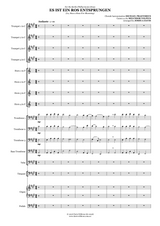
Instrumentation